
Views: 366 Author: Site Editor Publish Time: 2026-07-03 Origin: Site


Many bakery owners view containers simply as delivery vessels. Yet, you must frame packaging as a critical operational center. It directly impacts product integrity, customer retention, and labor efficiency. A crushed croissant instantly ruins the consumer experience. Stale cakes create costly refund requests and damage your brand reputation. Over the years, we have seen a major shift from basic utility to brand differentiation. Bakeries face unique pressures regarding delivery logistics, shelf-life demands, and strict food safety compliance. Delivery applications now force businesses to rethink transit survival strategies entirely. You must adopt a reliable evaluation framework. We balance material performance, accurate dimensions, operational footprint, and brand return on investment. This overarching strategy helps you make evidence-based purchasing decisions. You will learn how to match specific baked goods to optimal container types. We will also explore navigation of dimension standards to scale your brand profitably.
Choosing the right material dictates shelf-life; a plastic pastry box maximizes visual merchandising but requires strict temperature management to prevent condensation.
Accurate pastry box size selection reduces transit damage by eliminating void space, directly lowering refund rates on delivery orders.
The true cost of packaging includes assembly labor and storage footprint, making flat-pack structural designs critical for high-volume operations.
Upgrading to custom pastry packaging should be timed with specific volume thresholds to justify Minimum Order Quantities (MOQs) without impacting cash flow.
Packaging failures heavily impact bottom-line profitability. Customers demand pristine presentation upon delivery. Crushed products lead to immediate refund requests on delivery applications. Stale items destroy repeat business potential. Leaked grease creates messy unboxing experiences. These issues quickly erode your profit margins. You must evaluate containers against strict business criteria rather than aesthetics alone.
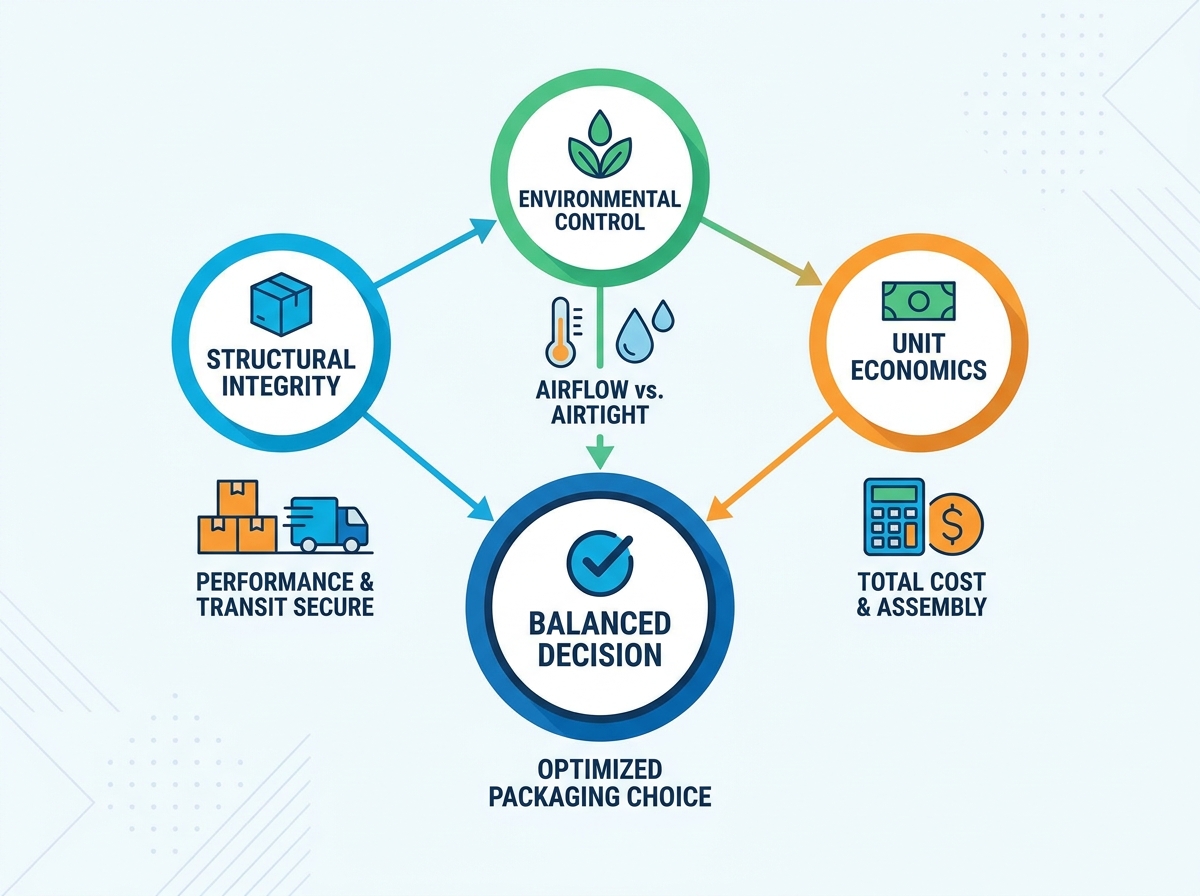
We rely on three primary evaluation pillars for operational success. First, evaluate structural integrity. Your boxes must endure stacking weights inside delivery bags. They also need to survive constant transit vibration. Delivery drivers often handle multiple orders simultaneously. A weak base collapses under pressure easily. We often see lightweight boxes fold inward, destroying intricate frosting designs entirely.
Second, prioritize environmental control. Different baked goods require specific airflow management. Crisp items like croissants need breathable environments to maintain flakiness. Conversely, moist cakes require airtight seals to prevent drying out. You must match airflow dynamics to product chemistry. Trapping moisture around a crusty baguette turns it rubbery within hours.
Third, analyze unit economics thoroughly. Look closely at the total cost per order. This calculation includes base containers, necessary inserts, and assembly time. You might find cheap containers from overseas suppliers. However, labor costs spike if your staff spends minutes assembling each unit. The cheapest option rarely offers the best operational value. Focus on how containers perform during peak service hours. Efficiency directly dictates your daily order capacity.
Material selection directly determines shelf-life and visual presentation. You generally choose between rigid plastic, flexible plastic, and coated cardboard. Each category serves distinct operational needs. Traditional coated cardboard works well for standard bakery items. However, delicate items demand superior protection and visibility.
You gain significant advantages when evaluating PET dessert packaging. High-clarity PET offers exceptional visual merchandising capabilities. Premium, heavily decorated items rely entirely on visibility. Colorful macarons and intricate entremets drive impulse buys when displayed clearly. Consumers eat through visual stimulation first. A clear container acts as a miniature storefront. Furthermore, plastic outperforms uncoated paper regarding moisture and grease resistance. Butter-heavy pastries quickly saturate standard paper boxes. Syrupy items leak through cardboard bases easily. Plastic creates an impenetrable barrier against these elements. A quality Plastic Pastry Box ensures oils stay contained safely.
Material Category | Best Suited For | Moisture Resistance | Visual Merchandising Potential |
|---|---|---|---|
Rigid PET Plastic | Macarons, Entremets, Frosted Cakes | Excellent (Airtight possible) | Maximum Clarity |
Coated Cardboard | Heavy Pies, Dense Breads | Moderate | Low (Unless windowed) |
Flexible Plastic Films | Cookies, Muffins | High | High Clarity |
You must navigate specific implementation risks carefully. Address the condensation trap immediately. You must cool baked goods entirely before sealing them. Warm items release steam constantly. This steam hits the cool ceiling and drops back down. Condensation ruins delicate textures and creates soggy pastries.
Additionally, consider local compliance laws regarding single-use plastics. Rigid plastics face varying recycling regulations across different municipalities. Ensure you source widely accepted plastics. You should also verify disposal guidelines in your primary delivery zones. Sustainable operations require balancing aesthetic needs against environmental realities.
Proper dimensions serve as the ultimate defense against transit damage. Correct sizing prevents internal movement during unpredictable transport. You effectively negate the need for excess filler material. Excess tissue paper or bubble wrap inflates unit costs. A snug fit ensures items arrive perfectly intact. Accurate pastry box size selection requires understanding product footprints deeply.
You must evaluate standard footprint dimensions against product density. Common standard sizes include four-by-four, six-by-six, and nine-by-nine inches. A single large cupcake fits perfectly in a small square box. A heavy fruit tart might require a wider base. Product density dictates necessary board grade or plastic thickness. Heavy items in oversized boxes slide around dangerously during transit.
Height plays an equally crucial role in this process. You must factor in frosting peaks and decorative toppers. Multi-tiered cakes require specialized structural support and extra vertical clearance. A lid touching the frosting immediately triggers a customer refund. Always measure your tallest product variation before committing to box dimensions.
Inserts stabilize complex products within larger outer boxes. Custom cavities securely cradle delicate items. Standard cupcake inserts lock the base firmly in place. Using specialized PET dessert packaging prevents side-to-side sliding completely. By using inserts, you can standardize outer box sizes. You only swap interior inserts based on daily menus. This strategy drastically reduces packaging inventory variations. It streamlines your entire ordering process.
Physical space directly affects your overall operational flow. You must assess the warehouse footprint required for inventory storage. Nested plastic containers consume minimal vertical space. A stack of fifty rigid lids often occupies just ten inches. Conversely, flat-packed cardboard boxes require substantial shelving space. Small cafes often struggle to store bulk pallets. Calculate your available storage volume before authorizing large orders.
Labor costs represent a hidden drain on bakery profitability. We must evaluate assembly time for each container type. Pop-up or auto-bottom boxes assemble in mere seconds. Lock-corner folding boxes require manual folding and precise tucking. Staff members can spend hours pre-assembling complex packaging daily. You pay hourly wages for this tedious, non-revenue-generating task. A box costing ten cents less might cost fifty cents more in labor. Always time the assembly process during your evaluation phase.
Here are essential best practices for operational compliance:
Verify FDA food-contact safety standards for all new inventory.
Request detailed compliance certificates from your manufacturing partners.
Ensure inks used on exteriors never bleed into interiors.
Check adhesive safety if glue contacts food directly.
Food safety compliance remains strictly non-negotiable. Harmful chemicals from cheap packaging can migrate into fatty foods. Butter and oils readily absorb environmental odors and toxins. You must protect your customers and maintain your business license. Never compromise on certified, food-safe materials.
Every bakery eventually faces a critical scaling question. When do you outgrow stock boxes featuring branded stickers? You must evaluate specific dimensions for packaging customization. Stickering boxes works perfectly for small startup operations. However, high-volume production makes manual labeling highly inefficient. Hand-applying labels slows down dispatch times significantly.
You need a rigorous cost-benefit analysis before upgrading systems. Inline flexographic printing suits massive production runs perfectly. Digital short runs cater well to seasonal menus. Evaluate plate fees against per-unit volume savings. Manufacturers heavily enforce Minimum Order Quantities (MOQs). A custom pastry packaging run might require ordering ten thousand units. You must ensure cash flow can handle this upfront investment. Never tie up essential operating capital in slow-moving inventory.
Custom structural designs heavily influence brand perception. Unique window placements showcase your most vibrant products beautifully. Custom die-cuts elevate the customer unboxing experience. These structural upgrades directly justify premium menu pricing. Customers gladly pay higher prices for perceived luxury. High-end containers transform simple pastries into premium gifts. This psychological shift drives higher average order values consistently.
We can summarize this evaluation funnel logically. Always start with your specific product needs. Determine whether items require steady airflow or airtight seals. Next, move directly to sizing constraints. Measure exact dimensions to prevent transit damage entirely. Calculate hidden labor costs tied closely to assembly times. Finally, finalize material choices based on budget and visual impact.
We highly recommend ordering unbranded sample runs first. Conduct physical stress tests inside your own kitchen. Perform drop tests to evaluate base structural integrity. Run overnight moisture tests to check for condensation traps. Conduct assembly time trials with your busiest staff members. These real-world tests prevent costly mistakes before commitment. Evidence-based decisions always protect your operational margins.
A: Yes, if items are packaged warm. Condensation occurs when steam hits cool plastic surfaces. This moisture drops back down, ruining delicate pastry textures. You must cool baked goods entirely before sealing them. Alternatively, select ventilated plastic options to allow steam to escape safely.
A: Start with flat-packed, standard-sized kraft or white cardboard boxes. Apply custom labels or branded stamps manually. This approach minimizes upfront capital investment. You should graduate to auto-bottom boxes only when daily labor costs exceed your bulk packaging savings.
A: PET is widely recognized as completely food-safe. It performs exceptionally well in standard refrigeration units. However, performance in deep-freeze environments depends heavily on specific plastic gauges. Check manufacturer specifications, as thin PET risks becoming brittle and cracking under freezing temperatures.
A: Measure the base width of your largest item first. Multiply this measurement by the maximum item count per box. Finally, add a 0.5-inch tolerance gap. This slight gap allows easy removal without damaging intricate frosting or delicate crusts.


