
Views: 0 Author: Site Editor Publish Time: 2026-03-24 Origin: Site


The Roast Chicken Box packaging plays a crucial role in both preserving the food and making it appealing to customers. Whether you're a food service provider, supermarket, or a restaurant, selecting the right packaging material for roast chicken is essential for maintaining product quality, ensuring safety, and creating an attractive presentation that appeals to customers. Packaging isn’t just about enclosing the product—it is about maintaining the integrity of the roast chicken, showcasing the product, and making it easy for consumers to handle.
When it comes to Roast Chicken Box packaging, three primary materials are often considered: PET (Polyethylene Terephthalate), PP (Polypropylene), and PE (Polyethylene). Each of these materials comes with distinct advantages, making them suitable for different packaging needs. In this article, we will dive into the characteristics of each material, their benefits, and help you determine which is the best option for your packaging requirements, considering factors like durability, food safety, and cost-effectiveness.
Choosing the right material for your Roast Chicken Box packaging involves more than just aesthetic considerations. The material needs to:
Protect the product: The packaging must ensure that the food remains fresh, secure, and safe from contamination. Whether the Roast Chicken Box is used for takeaway or retail, it is crucial to ensure that the box provides sufficient protection from environmental factors such as humidity, temperature, and physical damage.
Be food-safe: Packaging materials need to comply with stringent food safety regulations. The material used in Roast Chicken Box packaging must be non-toxic and must not release harmful chemicals that can contaminate the food inside. Food-grade materials are essential to guarantee consumer safety.
Enhance the customer experience: Packaging is a key element of the customer experience. The material used should not only protect the product but also present it in an appealing way. A Roast Chicken Box should be easy for customers to open, and it should display the product in an appetizing way, making the roast chicken look fresh and delicious. A box that is easy to carry and store also enhances the user experience.
Be cost-effective: The material should meet budgetary constraints while still delivering high performance in terms of protection and presentation. With increasing demand for affordable yet high-quality food packaging, selecting the right material can be a significant factor in reducing costs.
Selecting the right packaging material for Roast Chicken Boxes depends on the product's intended use, the temperature it will be exposed to, how it will be transported, and its overall presentation in retail spaces. Below, we’ll explore three common materials used for this packaging and examine their unique advantages.
PET is a widely used thermoplastic polymer that is recognized for its exceptional clarity, high strength, and durability. It is often used in food packaging due to its ability to withstand temperature changes and preserve the product’s integrity. PET is known for being one of the most commonly recycled plastics, making it a popular choice among environmentally-conscious businesses.
Transparency: One of the key benefits of PET is its high clarity. The transparency of PET allows the Roast Chicken Box to provide a clear view of the roast chicken inside, which makes it an attractive option for both retail and takeaway food packaging. This clear visibility enables customers to inspect the food, making the packaging more enticing and helping to promote the product.
Durability: PET is highly resistant to physical stress and damage. It is much more durable than other materials, providing extra protection for the food inside. Whether in transit or on the shelf, PET packaging can withstand bumps, drops, and other potential damage during handling. This high durability ensures that the Roast Chicken Box stays intact, maintaining both the product's presentation and its safety.
Temperature Resistance: PET can handle a wide range of temperatures, from freezing to moderately high heat. This makes it ideal for both chilled and heated food products. For Roast Chicken Boxes, this means that the material can preserve the chicken’s freshness, whether the packaging is used for refrigerated items or items that need to be kept warm for an extended period.
Recyclability: PET is considered one of the most recyclable plastic materials available. As environmental concerns grow, more businesses are opting for PET packaging due to its ability to be recycled, reducing its environmental impact. Consumers are increasingly drawn to products that use recyclable packaging, and using PET can enhance a brand’s sustainability credentials.
PET is widely used for packaging a variety of food products such as salads, ready-to-eat meals, and fresh produce. For Roast Chicken Box packaging, PET provides the necessary clarity and durability to ensure that the product is both visible and well-protected. It is especially suitable for high-end retail environments where presentation is a priority.
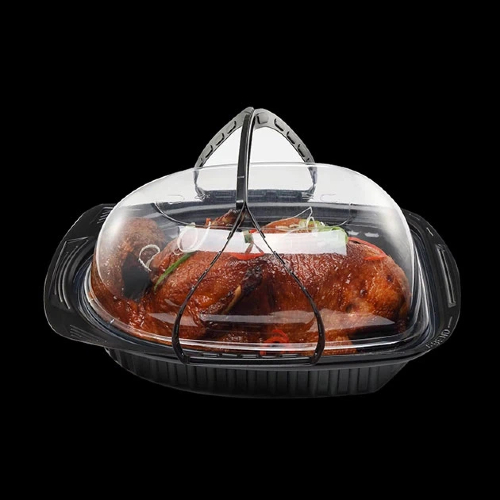
PP is a versatile thermoplastic polymer known for its lightweight properties and high resistance to both heat and chemicals. It is commonly used in food packaging for products that require sturdy yet flexible containers. PP is an ideal material for Roast Chicken Box packaging, particularly when heat resistance and flexibility are important.
Lightweight: PP is a lightweight material that makes packaging easier to handle and transport. Since Roast Chicken Boxes often need to be transported long distances, lightweight packaging helps reduce transportation costs and makes the packaging easier for customers to carry.
Heat Resistance: PP has excellent heat resistance, making it an ideal material for products that need to endure higher temperatures during transport or storage. For Roast Chicken Boxes, this means that the packaging can safely hold hot food without degrading or warping. PP's ability to resist heat ensures that the roast chicken remains safe for consumption and maintains its temperature for an extended period.
Durability and Flexibility: While PP is lightweight, it is still durable and resistant to breaking or cracking. It also offers flexibility, which allows for better design options and more creative packaging solutions. The Roast Chicken Box can be molded into various shapes and sizes, making it easier to create packaging that fits the product perfectly.
Cost-Effectiveness: When compared to PET and PE, PP is often more affordable. This makes it an ideal material for businesses that are looking for a balance between quality and cost. If budget is a concern but durability and functionality are still necessary, PP can offer a good value solution for Roast Chicken Box packaging.
PP is widely used in containers for takeaway food, ready meals, and salad boxes. Its excellent resistance to heat makes it suitable for food products that require durable and long-lasting packaging. Roast Chicken Boxes made from PP are especially popular in the takeaway food industry due to their flexibility and resistance to heat.
PE is one of the most widely used plastic materials globally, available in both low-density (LDPE) and high-density (HDPE) forms. It is a cost-effective material that offers moisture resistance and strong sealing properties. PE is especially useful for products that require protection from moisture and leaks, making it an ideal material for Roast Chicken Box packaging.
Moisture Resistance: One of the most significant benefits of PE is its ability to resist moisture. Roast Chicken Boxes made from PE can effectively keep the food fresh by preventing moisture from getting inside the packaging. This is particularly important for maintaining the roast chicken’s quality during transport or in storage.
Strong Sealing Properties: PE offers excellent sealing capabilities, which means that Roast Chicken Boxes made from PE can be tightly closed to prevent air, dirt, and contaminants from entering. The ability to seal the box securely ensures that the food inside remains safe and protected from external factors.
Cost-Effectiveness: PE is a relatively inexpensive material compared to both PET and PP, making it an affordable option for businesses that need to manage their packaging costs. Its cost-effectiveness, combined with its reliable performance, makes it a popular choice for mass-market applications.
Recyclability: Like PET, PE is recyclable, which makes it a more eco-friendly option compared to other materials. It can be recycled into new products, contributing to reduced plastic waste and supporting sustainability initiatives.
PE is used in a wide range of food packaging applications, including bread bags, milk cartons, and frozen food packaging. For Roast Chicken Boxes, PE’s moisture resistance and sealing properties make it ideal for packaging products that need to stay fresh and protected from contamination.
When selecting the best material for Roast Chicken Box packaging, there are several key factors to consider. The following comparison table summarizes the key benefits of each material to help you make an informed decision.
Material | Transparency | Heat Resistance | Moisture Resistance | Durability | Recyclability | Cost | Best Use Case |
PET | High | Medium | Medium | High | High | Medium | Display and retail packaging |
PP | Medium | High | Low | High | Medium | Low | Takeaway and delivery packaging |
PE | Low | Low | High | Medium | High | Low | Moisture-sensitive packaging |
Product Temperature: If the Roast Chicken Box will be subjected to high temperatures during transport or storage, materials like PP are ideal due to their heat resistance.
Display Needs: For retail environments where product visibility is key, PET is the best choice because of its clarity and visual appeal.
Cost Constraints: If you are working with a limited budget, PE offers a more affordable solution, while still providing strong sealing and moisture resistance.
Environmental Considerations: PET and PE are both recyclable, making them better choices for eco-conscious businesses. However, be sure to check with suppliers for recycling programs.
Choosing the right material for Roast Chicken Box packaging—whether it’s PET, PP, or PE—depends on several factors, including transparency, heat resistance, moisture protection, cost, and environmental impact. Each material has its own unique advantages that can cater to the specific needs of your business. Understanding these properties will help you make an informed decision that ensures both the preservation of product quality and an enhanced customer experience.
At Hangzhou Kesheng Packaging Material Co., Ltd., we specialize in providing tailored packaging solutions for a wide range of products, including Roast Chicken Boxes. Whether you need clear, durable PET packaging or moisture-resistant PE solutions, our team can help you choose the best material based on your unique requirements. With our extensive expertise and commitment to quality, we are here to support your business in finding the perfect packaging solution.
Feel free to reach out to us to learn more about our offerings and how we can help elevate your packaging experience.
The best material depends on your specific needs. For clear visibility, PET is a great choice, while PP is better for heat resistance and cost-effectiveness. PE is ideal for moisture protection.
Yes, PET is generally more durable and resistant to impact, making it a better option for products that need extra protection.
Yes, all three materials can handle varying temperatures, but PP is best for products exposed to high heat, while PET can handle both hot and cold temperatures.
PE is recyclable, which makes it an eco-friendly choice compared to other non-recyclable materials. Ensure proper recycling practices are followed.
Yes, PET is transparent, durable, and resistant to moisture, making it suitable for takeaway Roast Chicken Boxes.


