
Views: 0 Author: Site Editor Publish Time: 2026-08-27 Origin: Site


Parenteral drug logistics face a stark reality today. A fractional increase in breakage ruins product margins instantly. Particulate contamination forces immediate batch recalls. Temperature excursions during transit delay critical clinical timelines. The pharmaceutical industry is rapidly shifting its approach to packaging. We are moving away from standard corrugated boxes. Generic foam solutions fail far too often under stress. Engineered pharmaceutical vial trays offer a superior, structural alternative. Manufacturers design them specifically for automated handling and rigorous sterilization. They guarantee zero-defect transit for sensitive biologics. This guide provides an evidence-based evaluation framework. Quality assurance, supply chain, and procurement leaders need this actionable data. You can evaluate and specify the right transport trays safely. You will learn to compare options objectively without relying on vendor hyperbole.
Material selection must balance sterilization compatibility (gamma, autoclave) with impact resistance to ensure safe glass ampoule storage and transit.
Automation compatibility is non-negotiable; trays must feature precise dimensional tolerances to prevent robotic handling jams.
Compliance documentation (FDA/ISO material certifications, particulate testing) is a mandatory baseline for any vendor shortlisting.
Poor tray selection triggers severe cascading consequences across the supply chain. Micro-fractures in glass often remain invisible to the naked eye. They expand rapidly under atmospheric pressure changes during air freight. This compromises sterility long before clinical administration occurs. Oxidation destroys highly sensitive biologics when container closure integrity fails. Label scuffing ruins the external retail presentation. It also destroys essential barcode readability. Scuffed barcodes lead to automatic lot rejection at modern distribution centers. Stopper displacement causes immediate product spoilage and costly delays.
We must establish strict baseline requirements for logistical success. Expect absolute zero breakage during all transit handling phases. Demand zero particulate shedding near vulnerable sterile zones. You need seamless physical integration into secondary packaging lines. High-speed cartoners and case packers require perfectly aligned components. Any deviation causes machinery to jam and damages the drug product.
Understand the functional overlaps in pharmaceutical packaging formats. Structural transport trays differ substantially from flexible medical blister packaging. Blister formats typically serve as primary or secondary retail barriers. They protect individual doses for direct consumer or clinical use. Transport trays act as robust structural skeletons. They organize and protect high-value vials during bulk transit. You use them upstream before the final commercial packout phase.
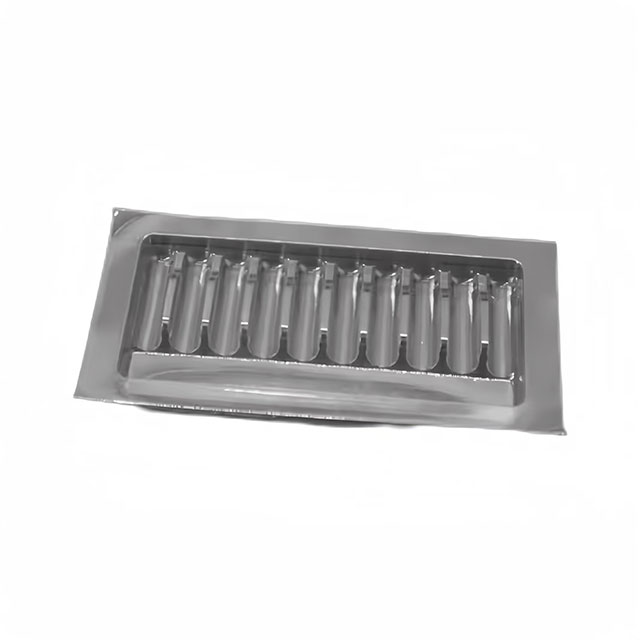
Evaluating thermoplastics requires examining rigidity and overall weight closely. You must also check specific temperature thresholds for your cold-chain routes. Common industry materials include PETG, Polycarbonate (PC), and Polystyrene (PS). Each polymer reacts differently to mechanical stress and intense heat. PETG offers excellent visual clarity and solid impact resistance. Polycarbonate handles extreme autoclave heat effortlessly. Polystyrene provides excellent rigidity but cracks easily under heavy dynamic impact.
Thermoplastic Material Comparison
Material Type | Impact Resistance | Heat Tolerance | Best Sterilization Fit |
|---|---|---|---|
Polycarbonate (PC) | Very High | Excellent (Up to 135°C) | Autoclave / Steam |
PETG | High | Moderate (Up to 70°C) | Gamma Irradiation / EtO |
Polystyrene (PS) | Low to Moderate | Low (Up to 60°C) | EtO (Single-use routes) |
Sterilization realities dictate your final material choice heavily. Autoclave cycles use high-pressure steam and extreme heat. Polycarbonate survives repeated autoclave processing without warping or melting. Gamma irradiation breaks down polymer molecular chains differently. It causes severe brittleness and yellowing in standard plastics over time. PETG handles gamma doses much better than traditional PVC. EtO (Ethylene Oxide) processing requires gas-permeable environments. Materials must allow EtO gas to penetrate and degas efficiently.
Particulate and outgassing risks threaten sterile environments constantly. Cheap commodity plastics release volatile organic compounds in closed environments. Always specify virgin, medical-grade polymers for your trays. Recycled plastics can leach hazardous chemicals into the drug ecosystem. They shed microscopic particulates near sterile closures during transit vibration. This subtle contamination ruins the entire manufacturing batch instantly.
Dimensional stability drives high-speed filling line efficiency. Automation relies on highly predictable spatial positioning. Vision systems and robotic grippers expect vials in exact coordinates. Millimeter variations cause robotic arms to mis-pick the product. Line jams halt production and waste expensive specialized labor. Thermoformed trays must maintain absolute dimensional consistency across millions of units.
Cavity design dictates how securely vials remain seated. Snap-fit cavities grip the glass flange firmly. They prevent vertical movement during intense transit vibration. Loose-fit cavities allow extremely fast robotic extraction. Your choice depends entirely on the primary container shape. Securing a standard flat-bottomed 10ml vial tray differs greatly from securing delicate ampoules. A custom-molded ampoule tray requires specific neck and base support. Ampoules tip over easily without deep, contoured nesting cavities.
Nesting and stacking features optimize your expensive warehouse footprint. Trays must incorporate robust stacking lugs into their perimeter design. Anti-jamming draft angles prevent empty nested trays from locking together. A 3-to-5 degree draft angle usually ensures smooth mechanical denesting. The structural design must isolate overhead weight perfectly. Load-bearing pressure should never transfer to the delicate glass vials below.
Regulatory baselines prove vendor manufacturing reliability and facility hygiene. Demand ISO 13485 certification from every prospective packaging supplier. Request updated ISO Class 7 or Class 8 cleanroom manufacturing certificates frequently. Ensure FDA CFR 21 compliance for food and drug contact materials. These documents form the absolute mandatory baseline for initial procurement audits.
Transit testing standards simulate real-world logistical abuse accurately. ISTA (International Safe Transit Association) testing remains the global gold standard. Vendors must validate their tray designs against rigorous drop tests. ISTA 3A vibration and thermal cycling validations are absolutely essential. Do not accept untested trays lacking empirical laboratory data. Manual drop tests do not replace automated vibration tables.
Supply chain security requires rigorous physical asset traceability. Modern trays incorporate lot-traceable stamping directly on the plastic surface. Advanced operations integrate durable RFID chips into the tray base. These technologies track valuable drug shipments globally in real time. They prevent dangerous counterfeiting and streamline regulatory product recalls dramatically.
Building a feature-to-outcome matrix helps you evaluate options objectively. A proper vial tray comparison weighs conflicting logistical criteria carefully. Balance heavy tray weight against rising air freight expenses. Heavy trays protect better but inflate your cold-chain shipping budgets. Compare extreme multi-use durability against single-use sustainability goals. Define the specific performance metrics driving your unique project success.
Tooling choices impact your upfront capital investments significantly. Standard tooling offers deployment speed and lower initial entry costs. Custom injection-mold tooling requires higher upfront capital expenditure. Standard off-the-shelf cavities work perfectly well for basic generic drugs. Custom sizes prevent catastrophic glass shifting during unusually rough global transit. You must analyze your specific distribution routes before selecting a tooling strategy.
Vendor location and lead times alter your matrix scoring. Domestic suppliers offer faster turnarounds and simplified communication loops. Offshore suppliers might offer better unit pricing but carry shipping risks. Factor these geopolitical and logistical realities into your final comparison matrix.
Skipping pilot line trials invites catastrophic operational failure. Manual drop tests often mislead procurement teams entirely. Trays may survive a simple hand-drop test in the office. They frequently fail under heavy automated case packer stress. Vacuum grippers might struggle with poorly textured plastic surfaces. Pilot testing inefficient setups causes massive commercial delays.
Assess supply chain resilience during early vendor selection. Check the vendor's actual cleanroom production capacity limits. Ask probing questions about their dual-sourcing capabilities for raw polymers. Material shortages disrupt single-source packaging operations very quickly. You need a partner capable of scaling production rapidly during demand spikes.
Follow a practical three-step action plan for procurement success:
Request detailed dimensional drawings to confirm robotic compatibility immediately.
Audit vendor QA packets for essential cleanroom and material certificates.
Commission a minimum viable pilot run before authorizing full commercial rollout.
Safe transport remains a strictly engineered outcome. It never happens by mere accident or luck. The right tray acts as a crucial risk-mitigation asset. We must stop viewing it as a cheap packaging commodity. Material selection dictates your success against sterilization and physical impact. Design tolerances dictate your success on the automated filling line.
Request detailed material spec sheets from your short-listed vendors today. Ask vetted manufacturers for physical structural samples to run on your machinery. Schedule custom tooling consultations to protect your most sensitive products. Secure your parenteral drug supply chain proactively before breakage ruins your next batch.
A: Polycarbonate stands out for reusable applications. It handles repeated high-temperature autoclave sterilization cycles effortlessly without warping. Other durable thermoplastics like PETG work exceptionally well for single-use or gamma-sterilized transport routes.
A: Blister packaging typically serves as a primary retail presentation barrier. It protects individual doses for consumers. Structural transport trays are engineered specifically for bulk handling. They enable high-speed line automation and prevent glass-to-glass contact during bulk shipping.
A: Rarely. Vials feature flat bottoms and standard thick flanges. Ampoules possess fragile, elongated glass necks and rounded bases. A dedicated ampoule tray requires deeper nesting cavities. It needs specific neck-support mechanisms to prevent snapping during intense vibration.
A: Always request comprehensive material safety data sheets (MSDS). Ask for current ISO 13485 cleanroom manufacturing certifications. Demand complete ISTA testing validations proving the tray survives standardized drop, vibration, and thermal cycling parameters.


