
Views: 0 Author: Site Editor Publish Time: 2026-08-18 Origin: Site


For food processors, distributors, and retailers, packaging is a critical operational variable. It operates as much more than a simple commodity holding your product. Selecting the wrong container directly impacts product shelf-life and transportation integrity. Poor choices also complicate strict regulatory compliance and quickly break end-consumer trust. Businesses face increasing pressure to balance functionality, safety, and shelf appeal. This guide breaks down the technical specifications and material limitations of various containers. You will learn the specific operational factors required to evaluate packaging properly. We will help you source highly reliable enclosures tailored for your specific production lines. By understanding these core principles, you can confidently navigate supplier catalogs and protect your brand reputation. Modern food distribution leaves no room for trial and error on the shelf. This comprehensive resource ensures you make data-driven decisions from initial material selection to final consumer delivery.
Material selection must dictate your choice: align resin types (PET, PP, PLA) strictly with your product’s temperature and moisture requirements.
Structural features like tamper-evident locks and perimeter seals directly impact both compliance and retail shrink rates.
Assess operational compatibility—ensure the chosen packaging design aligns with your manual or automated filling line speeds.
Verify supplier compliance with FDA/USDA food-contact regulations and scrutinize sustainability claims against actual municipal recycling infrastructure.
Determine if a hinged clamshell is the most efficient choice for your specific operational and display needs. Many businesses rush into purchasing generic containers without auditing their production workflow. You must evaluate how the container moves from the filling line to the final retail shelf. Framing your business problem clearly prevents costly packaging mismatches.
Hinged clamshells dominate many grocery perimeters for good reasons. They offer single-piece inventory tracking, which simplifies procurement and storage. Manual packing lines benefit from faster closing speeds since workers do not need to match separate lids to bases. Furthermore, the inherent hinge provides structural protection during transit. However, hinged designs do carry limitations. They have a fixed footprint. If your product volume fluctuates, you might ship empty air. Additionally, clamshell hinges often cause snags on high-speed automated lidding lines.
Two-piece containers feature a separate lid and base. These shine in variable-volume applications. You can use one standard food-grade plastic tray and pair it with multiple lid heights. Flat lids work well for low-profile foods, while dome lids accommodate bulky items like roasted chickens or large baked goods. This modularity reduces your overall tray inventory while maximizing display flexibility.
For high-security or specialty items, you might consider food blister packaging. This format provides high-visibility, form-fitting applications. Manufacturers often use it for specialty produce, delicate baked goods, or high-value retail items requiring rigid protection. Blister designs mold tightly to the product contour, restricting movement and preventing bruising.
Fill Speed Requirements: Calculate your target units per minute. Manual lines favor clamshells; automated lines often require flat trays.
Inventory Constraints: Assess your warehouse space. Single-piece items consolidate storage.
Retail Presentation: Determine if your product needs a custom-molded cavity or bulk volume space.
Match the plastic resin strictly to your food’s processing, storage, and consumer-use temperatures. A common industry mistake involves prioritizing container aesthetics over thermal compatibility. Placing a hot-filled product into a cold-rated plastic causes immediate warping, seal failure, and potential chemical migration.
Polyethylene Terephthalate (PET or PETE) remains the gold standard for cold chain applications. It provides exceptional clarity, making it perfect for fresh produce, deli items, and salads. Consumers prefer PET because it mimics the premium look of glass. However, PET possesses strict thermal limits. It melts and warps under high heat. You must never use PET for microwave applications or hot-fill processing.
Polypropylene (PP) handles extreme heat beautifully. This resin is your best choice for hot-fill applications, microwavable meals, and rotisserie items. PP maintains its structural integrity under high temperatures. The trade-off involves visual clarity. PP often appears hazy or slightly milky compared to crystal-clear PET. Additionally, PP can become brittle in deep-freeze applications, making it unsuitable for certain frozen food sectors.
Bioplastics, such as Polylactic Acid (PLA), offer compostable options for eco-conscious brands. These work best for companies operating within a verified circular lifecycle and consumers willing to absorb premium pricing. PLA looks like PET but carries significant risks. It has a very low heat tolerance. PLA containers can warp inside a hot delivery truck during summer transit. Furthermore, PLA requires commercial composting facilities to break down. Consumers often mistake PLA for standard recycling, which contaminates municipal recycling streams.
Resin Type | Best Applications | Key Limitations | Thermal Profile |
|---|---|---|---|
PET / PETE | Cold storage, deli, fresh produce | Warps under heat; not microwave safe | Cold to room temperature |
Polypropylene (PP) | Hot-fill meals, rotisserie, microwave | Hazy appearance; brittle in freezing temps | High heat tolerant |
PLA (Bioplastic) | Eco-branding, short-shelf-life organics | Transit warping; needs industrial compost | Cold to room temperature only |
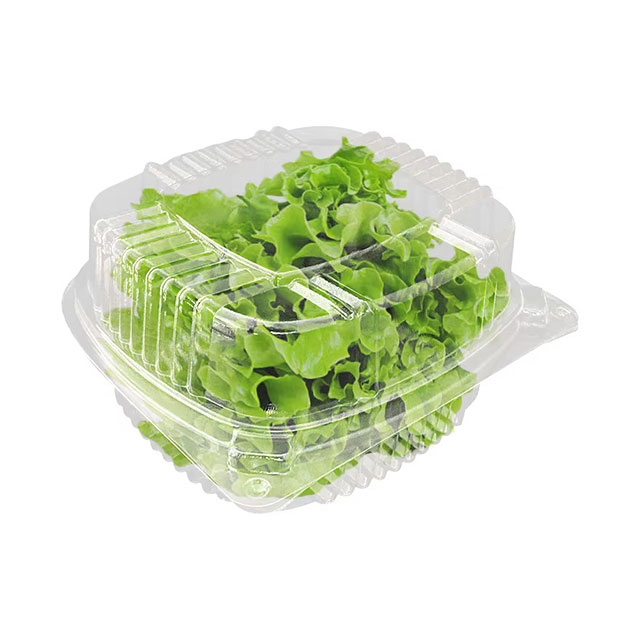
Evaluate the physical design of your plastic food clamshell against retail realities. A brilliantly formulated plastic resin means nothing if the physical closure fails. You must map specific structural features directly to your desired operational outcomes.
Tamper-evident mechanisms represent a non-negotiable feature for modern food distribution. The rise of third-party food delivery and grab-and-go retail demands secure enclosures. Tear-away strips or break-tabs provide instant visual proof of product integrity. If a delivery driver or a browsing customer opens the container, the broken tab signals the breach. This feature heavily reduces retail shrink rates and shields your brand from liability.
Closure types dictate packing speed and leak resistance. Button locks utilize small friction-fit dimples. They are exceptionally fast to close on a manual line. We recommend button locks for dry items like baked goods, whole fruits, or pastries. Conversely, perimeter seals lock tightly around the entire edge of the container. These leak-resistant seals are absolutely essential for cut fruit, marinated items, or any product prone to leaking juices. A failed seal ruins shipping boxes and creates slipping hazards in grocery aisles.
Merchandising factors heavily influence container geometry and chemical coatings. If you sell refrigerated products, assess your anti-fog coating requirements. Condensation builds up rapidly when cold items hit warm store air. Anti-fog chemistry prevents moisture droplets from forming, keeping your product visible. Next, evaluate the container form factor. A round plastic salad bowl conveys a premium, freshly-tossed aesthetic. However, square footprints optimize shelf space and drastically improve shipping cube efficiency. Square containers pack tighter on a pallet, lowering your freight expenses per unit.
Never assume a container is food-safe simply because it looks clean. Regulatory compliance requires meticulous documentation. You must hold your suppliers accountable to authoritative standards. Failing to do so invites recalls and regulatory fines.
Request specific regulatory documentation from every prospective supplier. They must provide up-to-date Letters of Guarantee (LOG). An LOG serves as a legally binding document confirming FDA or USDA compliance for direct food contact. It transfers a measure of liability back to the manufacturer if the packaging fails safety standards. Always keep these letters filed for your own facility audits.
Consider migration testing parameters. Chemical migration occurs when packaging compounds leach into the food product. This risk spikes when you package highly acidic foods (like tomatoes or citrus) or high-fat foods (like cheeses or oil-based dressings). Inquire about specific migration test results for your exact food profile. A container rated for dry goods might fail compliance testing when exposed to acidic marinades over a two-week shelf life.
Sustainability requires a serious reality check. Avoid falling for exaggerated eco-friendly claims. Many suppliers use vague terms like "green" or "earth-friendly" without backing them up. Instead, prioritize verifiable Post-Consumer Recycled (PCR) content. Requesting 30% rPET (recycled PET) significantly lowers your carbon footprint while maintaining food-grade safety. Stick to standard #1 (PET) or #5 (PP) recycling codes. Municipalities possess genuine downstream infrastructure to process these specific resins. Choosing obscure bioplastics often results in the packaging ending up in a landfill despite your best intentions.
Update your Letters of Guarantee annually.
Audit supplier certificates against FDA Title 21 requirements.
Test packaging in real-world temperatures, not just lab conditions.
Align recycling codes with your primary demographic's local infrastructure.
A cheaper clamshell often costs more in the long run. Poor operational integration destroys profit margins rapidly. If flimsy containers jam on your automated production line, the resulting downtime erodes any upfront savings. Similarly, if bases crack during palletization, you lose both the packaging and the food inside.
When you build your supplier shortlist, ask aggressive, operations-focused questions. First, ask about manufacturing tolerances. What is the variance in plastic gauge or thickness across a single production run? Inconsistent gauge causes crushing at the bottom of a stacked pallet. You need suppliers who utilize advanced extrusion controls to maintain uniform thickness.
Second, discuss tooling and customization. Adding a branded embossment sets your product apart on the shelf. Ask about upfront mold costs and engineering lead times. Modifying a stock mold is usually faster and cheaper than designing a completely custom footprint from scratch.
Third, audit their supply chain resiliency. Find out if the manufacturer relies on domestic resin or if they are subject to overseas shipping delays. Global bottlenecks can leave you without packaging during your peak harvest or sales season. Clarify their Minimum Order Quantities (MOQs) for staggered delivery. Strong suppliers will hold inventory in their warehouse and drip-feed it to your facility, optimizing your cash flow and floor space.
Your immediate next action is to request physical samples. Never sign a purchase order based on a digital catalog. Conduct rigorous fit and function tests in your own facility. Perform drop tests from shelf height. Run temperature abuse tests by leaving packed containers in a hot truck or deep freezer. Finally, conduct closing-speed trials with your shift workers to measure ergonomic friction. Data from these physical trials will reveal the true value of the packaging.
Choosing the right food-grade plastic clamshell packaging requires a delicate balance of thermal compatibility, retail security, and supply chain reliability. You cannot treat containers as an afterthought. Aligning your resin choice with your processing temperatures protects public health. Mandating tamper-evident features protects your retail margins. Vetting supplier tolerances ensures your production lines run without interruption.
Do not navigate these technical specifications alone. Contact your supplier's sales engineering team for a dedicated material consultation. Request a comprehensive sample kit tailored strictly to your specific food application. Testing physical samples today prevents catastrophic operational failures tomorrow.
A: No. PET will warp and potentially leach chemicals into the food. You must specify PP (Polypropylene) for microwavable applications, as it withstands high heat without melting or deforming.
A: They utilize a breakaway plastic hinge or tab that must be physically torn to open the container. This provides instant visual proof to the consumer that the contents remain untouched and secure since packaging.
A: Trays generally refer to a rigid base sealed with flexible film or a separate lid, ideal for bulk volume. Blister packaging describes a thermoformed plastic cavity engineered to tightly match the exact contours of a specific product.


