
Views: 0 Author: Site Editor Publish Time: 2026-10-19 Origin: Site


Packaging failures in the frozen food supply chain present a massive risk to operational success. Cracking plastic, seal breaches, or severe freezer burn directly impact product recall rates. They also heavily damage consumer brand trust. Polypropylene (PP) packaging solves many of these critical issues. Food processors widely adopt it for convenient frozen-to-microwave transitions. However, not all PP formulations perform equally in extreme environments. Procurement teams and facility managers must evaluate their options carefully. Selecting a reliable PP Frozen Food Tray requires a deeper look beyond basic specifications. You need to assess thermal resilience, automation compatibility, and strict regulatory compliance. In this guide, you will learn how to identify the right polymer blends for sub-zero storage. We will explore how to test trays for high-speed automated packaging lines. Finally, you will discover key strategies for ensuring zero chemical migration and maintaining ultimate food safety.
Standard homopolymer PP functions exceptionally well at room temperature. However, it quickly becomes brittle and shatters at freezing temperatures. When you expose standard PP to deep-freeze conditions, the polymer chains lose their natural flexibility. The glass transition temperature of basic homopolymer PP sits near 0°C. Falling below this threshold leads directly to structural micro-cracking during warehouse transit.
You must verify supplier formulations meticulously. Ensure they use a copolymer PP blend designed specifically for deep-freeze environments. Manufacturers create this blend by introducing ethylene into the propylene chain. High-quality copolymer PP handles extreme temperature drops down to -40°C. It must also survive rapid microwave reheating up to 120°C without degrading.
Structural testing serves as your primary validation tool. Implement these core structural testing criteria:
Implementation realities often highlight hidden design flaws. A tray might survive the warehouse freezer perfectly. But if it warps in the microwave, end-consumers will complain immediately. Best practices dictate running these thermal shock tests on multiple production batches. A common mistake is testing only empty trays. Always test impact resistance using the actual frozen food product inside. The dense, frozen mass drastically alters the impact dynamics upon dropping.
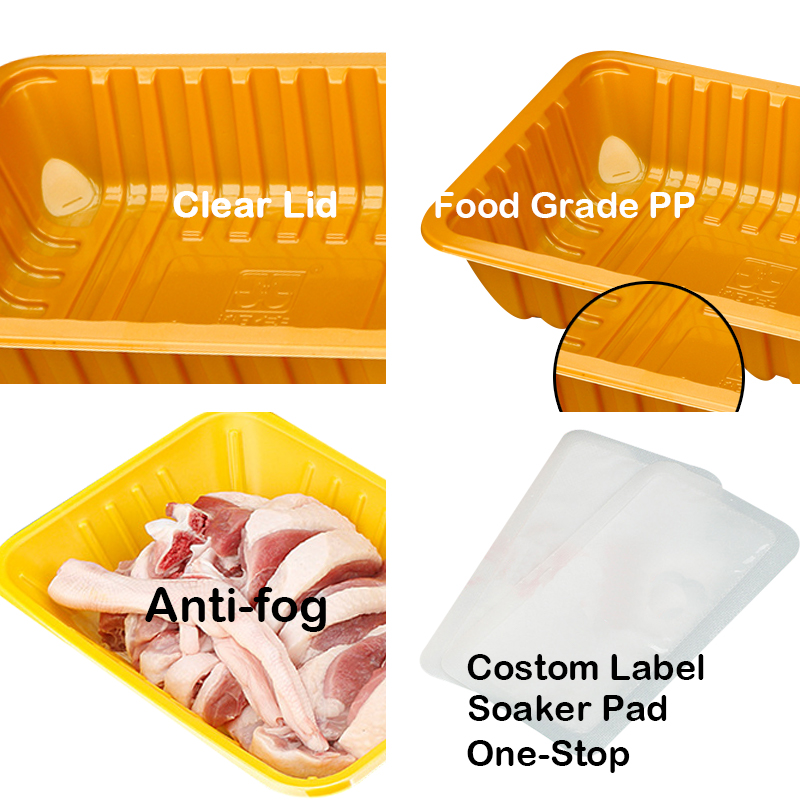
Machinery alignment dictates your overall production throughput. A brilliantly designed tray holds no value if it jams your equipment. It must glide seamlessly through tray sealers, MAP (Modified Atmosphere Packaging) units, or VSP (Vacuum Skin Packaging) lines. Manual intervention destroys processing efficiency.
Denesting efficiency usually creates the first major bottleneck in automated packaging. Focus your evaluation on these mechanical aspects:
Flange integrity directly determines your sealing performance. Inspect the flange flatness and width rigorously. A warped or excessively narrow flange leads to microscopic leaks. Leaks compromise food safety and destroy product shelf life instantly. You must confirm that the flange profile matches your preferred lidding films. Some processors use peelable films for enhanced consumer convenience. Others require permanent weld seals for maximum distribution security.
Using a poorly engineered pp frozen food tray on an incompatible sealer causes endless headaches. The pressure from a heated sealing head requires a perfectly flat, robust flange to bond correctly. Without it, you risk blowing the seal during high-altitude transport. Always conduct extensive dry runs on your actual machinery before approving a new tray design.
Regulatory baselines form the absolute foundation of food packaging. You must mandate comprehensive documentation from your packaging suppliers. This documentation must prove the material meets FDA, USDA, or equivalent regional standards for direct food contact. In the United States, materials must comply with Title 21 CFR regulations for olefin polymers. Never accept verbal confirmations regarding food safety.
Migration limits require careful scientific scrutiny. Review independent lab-tested data thoroughly. This data must confirm that zero harmful chemical migration occurs. Industry experts worry most about migration during long-term frozen storage and high-heat consumer reheating. High temperatures accelerate chemical transfers rapidly. The plastic must remain completely inert under these varying extremes.
Barrier considerations heavily influence your product shelf life. Recognize that standard PP has distinct physical limitations. It offers lower oxygen and moisture barrier properties compared to CPET or EVOH-layered trays. Evaluate if your specific product requires advanced protection. Highly sensitive foods degrade quickly when exposed to oxygen in the freezer.
You might need an EVOH (Ethylene Vinyl Alcohol) barrier layer integrated directly into the PP tray structure. This co-extrusion prevents severe freezer burn and oxidation over extended supply chain cycles.
Comparison of Common Packaging Barrier Properties
| Material Type | Oxygen Barrier | Moisture Barrier | Deep Freeze Suitability |
|---|---|---|---|
| Standard Homopolymer PP | Low | Moderate | Poor (Prone to cracking) |
| Copolymer PP | Low | High | Excellent |
| PP with EVOH Layer | High | High | Excellent |
| CPET | High | Moderate | Good |
A common mistake is over-engineering the packaging material. If your frozen product turns over quickly, a standard copolymer tray usually suffices. Do not invest in costly EVOH layers unless your product chemistry strictly demands it.
Matching form to function drives successful packaging design. Evaluate how the physical tray supports the exact food type being processed. High-liquid content requires deep sidewalls and splash-resistant geometries. Heavy proteins need rigid bases to prevent bowing when operators lift them. Multi-component meals require intricate compartmentalization to keep ingredients separated.
You must map these exact physical requirements directly to your intended pp frozen food tray applications. Opting for a tailored custom pp frozen food tray often solves complex processing challenges permanently. Consider these specific customization drivers:
When exploring custom designs, always factor in production efficiency. A customized footprint can dramatically reduce excess film usage during sealing. It can also optimize your tertiary packaging, allowing you to fit more units per corrugated master carton. Work closely with tooling engineers early in the process. Ensure your customized shape maintains proper draft angles so denesting remains flawless.
Operational consistency relies heavily on your packaging supplier. Evaluate the severe operational impacts of unexpected tray failures. Frequent line downtime and excess material waste quickly erode your processing efficiency. A dependable supplier actively helps you minimize these processing disruptions through strict quality assurance protocols.
Supply chain scalability is a non-negotiable metric for high-volume processors. Assess the supplier’s raw production capacity thoroughly. You need to verify their standard lead times, especially when ordering custom runs. Always check their specific contingency plans. Ask how they handle sudden raw material resin shortages or regional logistical disruptions. You need a partner capable of scaling output instantly during seasonal demand spikes.
Sustainability alignment matters immensely in modern food processing. While PP is technically recyclable under Resin Identification Code #5, local infrastructure realities vary drastically. Verify if the supplier incorporates FDA-approved post-consumer recycled (PCR) content. They must achieve this PCR integration without compromising the structural integrity of the deep-freeze tray itself.
The shortlisting action requires empirical validation on your floor. Demand a limited pilot run from your top supplier choices. Request 500 to 1,000 sample trays for live testing. Test these samples on your active production lines under real-world conditions. Watch carefully how they denest, seal, and freeze. A physical pilot run exposes hidden machinery friction before it disrupts your entire facility.
Selecting the right PP tray bridges the gap between processing efficiency, food safety, and consumer convenience. The appropriate copolymer blend ensures your product survives the harsh journey from flash-freezer to microwave. Getting the design right prevents costly operational bottlenecks on automated lines.
Base your final procurement decisions strictly on rigorous empirical testing. Conduct thorough frozen drop tests, evaluate seal integrity under pressure, and run extensive machinery dry-runs. Do not rely on manufacturer marketing claims alone. True performance is only proven directly on your processing floor under actual working conditions.
Reach out to technical packaging engineers immediately. Request detailed material safety data sheets and arrange a comprehensive line trial. By aligning your packaging material tightly with your specific product formulations, you eliminate processing delays and protect your brand's reputation.
A: PP (Polypropylene) is highly cost-effective and microwave-safe, but generally cannot withstand conventional oven temperatures. CPET (Crystallized Polyethylene Terephthalate) handles wider temperature extremes, including dual-ovenable applications. However, CPET typically comes at a higher weight and requires slightly different handling dynamics during the packaging process.
A: Yes, but standard PP is highly permeable to oxygen. For effective MAP that extends shelf life significantly, the PP tray must be co-extruded with a high-barrier layer. Materials like EVOH are layered within the PP to lock the modified gas mixture securely inside the package.
A: Partner with a specialized tooling engineer early in the design phase. Ensure the custom mold includes proper draft angles, prominent denesting lugs, and perfectly flat flanges. These tailored features prevent mechanical jams and guarantee compatibility with your specific tray sealing equipment.


