
Views: 0 Author: Site Editor Publish Time: 2026-10-22 Origin: Site


Material selection in commercial food packaging dictates more than just visual appeal. It directly impacts shelf life, regulatory compliance, and bottom-line logistics costs. Procurement and packaging teams often struggle to balance conflicting demands on the production line. They need versatile thermal tolerance, but they also require strict adherence to food safety regulations. Finding a single material capable of handling freezing cold and microwave heat without breaking the budget proves incredibly tough.
We will explore why polypropylene stands out as a top solution in the packaging sector. This guide provides an objective breakdown of crucial performance metrics and compliance benchmarks. You will learn exactly how to leverage this durable material for your next commercial packaging project, ensuring safety and operational efficiency from the factory floor to the consumer's kitchen.
Polypropylene enjoys widespread use primarily due to its exceptional chemical stability. Regulatory bodies closely monitor packaging materials coming into direct contact with consumables. A standard tray only achieves food-safe status when it meets specific, rigorous benchmarks. For example, FDA Title 21 CFR 177.1520 dictates strict rules for olefin polymers. Manufacturers must prove their products contain no harmful heavy metals or banned additives.
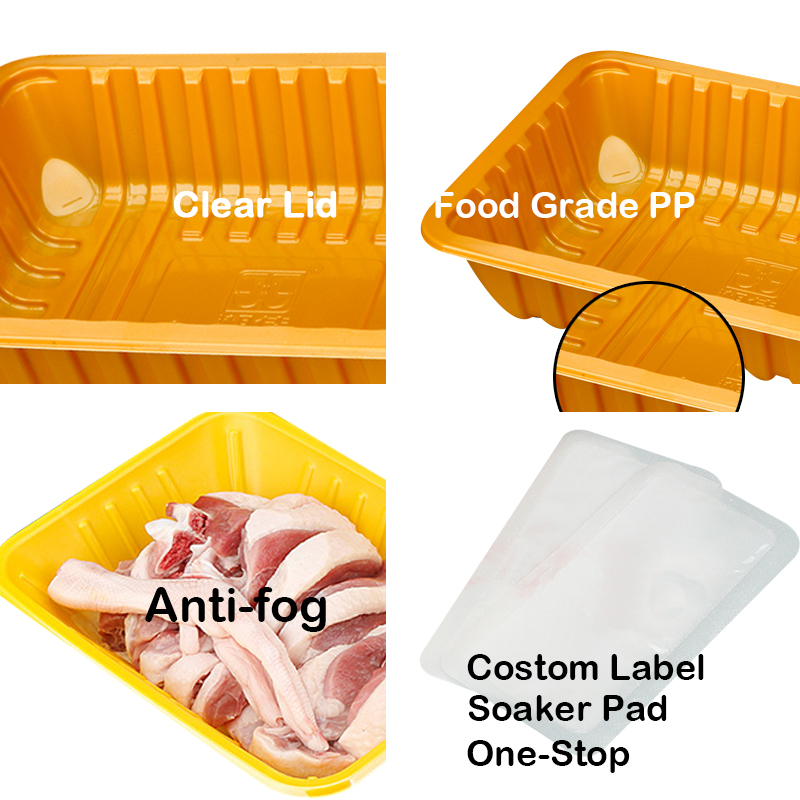
When you source a Food Grade PP Tray, you secure a packaging vessel inherently free of Bisphenol A (BPA). Buyers often express skepticism regarding plastic leaching, especially during high-heat applications. You can confidently address these concerns by highlighting polypropylene's chemical inertness. It resists breaking down when exposed to acidic foods like tomato sauces. It also holds up perfectly against high-fat foods, such as thick gravies, even under intense microwave heat. The molecular structure remains stable, preventing unwanted flavor transfer.
However, basic material safety does not guarantee a fully compliant final product. Trust and transparency matter greatly during the procurement process. While base polypropylene resin proves highly safe, manufacturers often introduce colorants and mold release agents. You must verify these secondary additives also carry rigorous food grade certifications. A dark black tray or a vibrant green container requires specific masterbatches. Always request documentation proving the entire final assembly meets regulatory safety standards.
The journey from a commercial kitchen to a consumer's dining table introduces extreme temperature variations. Polypropylene excels in this demanding environment. The material reliably withstands a vast temperature range, typically spanning from -20°C to 120°C. This specific microwave-to-freezer lifecycle makes it far superior to alternative plastics for ready-to-eat (RTE) meals. Polyethylene Terephthalate (PET) warps and melts at high temperatures. Polystyrene (PS) becomes dangerously brittle and snaps in cold storage. Polypropylene overcomes both limitations easily.
Impact resistance acts as another critical defense mechanism. The unique polymer structure prevents cracking when subjected to deep freezing. It maintains essential rigidity during long-haul transit. You experience fewer crushed boxes and fewer punctured films. This structural durability directly reduces product loss, protecting your profit margins.
Advanced packaging often requires high-barrier capabilities. Standard polypropylene allows a small amount of oxygen transmission over time. To combat this, manufacturers co-extrude the material. They sandwich a layer of Ethylene Vinyl Alcohol (EVOH) between layers of polypropylene. A typical PP/EVOH/PP structure blocks oxygen and moisture incredibly well. This barrier technology critically extends the shelf life of perishable goods, reducing retail waste.
Logistics expenses rapidly consume packaging budgets if you ignore material density. Polypropylene offers one of the lowest densities among commercial plastics, hovering around 0.90 g/cm³. This low density translates directly to lighter pallet weights. You can ship more units per truckload while remaining under strict freight weight limits. Over the course of a fiscal year, these subtle freight savings compound into massive cost reductions at scale.
Production speed also relies heavily on tray design. Standardized options feature built-in denesting lugs. These small ridges prevent empty trays from vacuum-locking together in tightly packed stacks. Your automated denesting machines can rapidly separate them and feed them into high-speed filling lines without jamming. Seamless integration keeps your facility running at peak operational capacity.
Return on investment (ROI) extends beyond the initial unit purchase price. You must contrast the upfront cost of the container against potential supply chain failures. Polypropylene might occasionally cost slightly more upfront than basic polystyrene. Yet, the dramatic reduction in spoilage, transit breakage, and retail returns quickly offsets that premium. You effectively buy insurance against common logistics failures.
| Material Type | Density (g/cm³) | Cold Storage Durability | Automated Denesting | Overall Freight Efficiency |
|---|---|---|---|---|
| Polypropylene (PP) | ~0.90 | Excellent | High (with lugs) | Excellent |
| PET | ~1.38 | Good | Moderate | Moderate (Heavier) |
| Polystyrene (PS) | ~1.05 | Poor (Brittle) | High | Good |
The versatility of polypropylene allows it to dominate several distinct aisles in the modern supermarket. Ready-to-eat (RTE) and prepared meals represent the largest growth sector. Consumers demand absolute convenience. They expect to pull a frozen meal from the freezer, toss it into the microwave, and eat directly from the container. Polypropylene handles this rapid thermal shock flawlessly, providing unmatched consumer convenience.
Fresh meat and poultry producers rely heavily on this material. You will frequently find these unique food grade pp tray applications in grocery store butcher sections. Processors utilize MAP (Modified Atmosphere Packaging) and VSP (Vacuum Skin Packaging) technologies to extend freshness. The tray acts as a sturdy base. Once sealed with barrier film and flushed with a specific gas mixture, the packaging preserves natural meat color and actively prevents harmful bacterial growth.
Bakery operations and hot deli counters also favor this robust material. Hot deli items sit under intense heat lamps for hours. Inferior plastics warp, sag, or melt under sustained infrared heat. Furthermore, roasted chickens and fried foods release hot grease. Polypropylene offers excellent grease resistance and maintains its structural integrity. It prevents messy leaks that frustrate customers and damage display cases.
Finally, retort processing demands extreme resilience. Certain shelf-stable foods require high-heat, high-pressure sterilization. Factories load sealed containers into massive autoclaves, subjecting them to temperatures exceeding 121°C. Specialized high-temperature PP variants endure this intense thermal sterilization, ensuring commercial sterility for soups and purees.
Procurement professionals eventually face a critical choice between off-the-shelf options and bespoke designs. You should frame the decision logic around your specific brand needs. Standard trays work perfectly for basic commodities. However, developing a custom food grade pp tray offers powerful advantages. You can engineer unique portion control compartments, embed brand logos directly into the plastic, or design specific sealing flanges tailored to your proprietary film.
Customization introduces distinct implementation risks. Tooling costs require a transparent upfront investment. Precision molds for thermoforming equipment often cost thousands of dollars. You must also account for Minimum Order Quantities (MOQs). Manufacturers usually require large volume commitments to justify setting up a custom production run. You need to factor these initial investments and extended lead times into your product launch timeline.
Film compatibility presents the most critical operational risk. Mismatched sealing films destroy production efficiency. A film designed for PET will not bond securely to a polypropylene flange. You must rigorously test film adhesion. Check the peelability on the specific tray surface before authorizing mass production. A seal that is too weak causes leaks, while a seal that is too strong frustrates consumers trying to open their food.
| Decision Factor | Standard Tray | Custom Tray |
|---|---|---|
| Initial Investment | Low (No tooling fees) | High (Mold creation costs) |
| Lead Time | Fast (Usually in stock) | Slow (Requires design & prototyping) |
| Brand Differentiation | Low (Generic shapes) | High (Custom logos & colors) |
| Specific Flange Needs | Limited to catalog options | Fully adaptable to custom machinery |
Food grade PP trays consistently offer the most balanced profile of thermal resilience, regulatory safety, and structural durability. They handle intense hot-fill applications, survive extended deep-freezing, and allow for direct consumer microwaving without compromising integrity. This versatility makes them an indispensable asset for extended-shelf-life foods, fresh proteins, and ready-to-eat meals.
We recommend a proactive approach for your next procurement cycle. First, define your specific operational temperature requirements and barrier needs clearly. Next, request a variety of physical samples from certified manufacturers. Finally, conduct rigorous automated sealing and drop tests on your own production lines. Taking these pragmatic steps ensures your packaging strategy minimizes waste while maximizing product safety and consumer satisfaction.
A: Yes, polypropylene is widely categorized under resin identification code #5. It is a highly recyclable material. However, local recycling infrastructure varies significantly by region. Consumers must also ensure the trays are rinsed clean of food residue and grease before processing, as severe food contamination can cause sorting facilities to reject the material entirely.
A: PET offers superior transparency and brilliant clarity, making it best for cold deli items or fresh produce displays. Polypropylene dominates in thermal applications. When exposed to microwave heat or hot-fill processes, PET quickly warps and deforms, whereas polypropylene maintains its rigid structure flawlessly.
A: Standard commercial tray sealers work perfectly well. However, the heat-sealing parameters—specifically time, temperature, and pressure—must be specifically calibrated for polypropylene. Additionally, the lidding film must feature a sealant layer chemically compatible with PP to ensure a secure, hermetic seal.


