
Views: 0 Author: Site Editor Publish Time: 2026-07-03 Origin: Site


Managing tablets from several bottles can make it difficult to remember which dose was taken, especially when schedules vary by day or time. Medical blister packaging addresses this problem by placing medication in formed cavities that can be sealed, labeled, and arranged into a clear sequence. Depending on the design, one cavity may hold a single tablet or a scheduled group of medicines. Understanding how these packs work helps patients, caregivers, pharmacies, and healthcare facilities evaluate protection, usability, adherence support, and compatibility before selecting a format.
A medication blister pack normally combines a formed cavity with a sealing layer. The cavity holds the tablet or capsule in a fixed position, while foil, paper-backed material, or another compatible lidding structure closes the opening. Each cavity remains sealed until the user pushes the medicine through the backing or peels the seal away. This separation reduces unnecessary handling and allows unopened doses to remain inside their individual compartments. However, the actual level of protection depends on the material combination, seal quality, storage conditions, and compatibility between the medicine and its complete container-closure system. Packaging must be evaluated against foreseeable factors that could cause contamination or deterioration.
The cavity layout also creates a visible record of medication use. A sealed compartment usually indicates that its contents have not yet been removed, while an opened position shows that the scheduled dose may already have been taken. Printed days, dates, dose times, arrows, or numbered sequences can make that record easier to interpret. These cues are particularly useful when several doses must be taken throughout the week. Nevertheless, the pack does not verify that the patient swallowed the medicine, and unclear labeling can still create errors. The design should therefore connect the physical dose arrangement with readable instructions, recognizable opening points, and a schedule that matches the prescription.
Medication blister packaging is available in multiple configurations because a simple once-daily tablet and a complex multi-drug regimen do not create the same requirements. Unit-dose formats place one tablet or capsule in each cavity and are useful when every dose needs separate identification or protection. Multi-dose compliance cards may place several medicines scheduled for the same time in one compartment. Weekly, monthly, and treatment-course layouts can then arrange those cavities in chronological order. A transparent Pill blister packaging design may also help users identify whether a cavity is filled before opening it, although visual identification should never replace the printed label or prescription instructions.
A foldable card provides additional room around the blister for medication names, dose times, handling instructions, lot information, or warnings. The customer website presents transparent PET packs in seven-day and 31-day configurations, with custom ordering available for medication applications. Its Cold-seal medical packs use a card-based structure intended to organize pills without relying on a conventional bottle. Cold-seal designs generally close through pressure-sensitive layers rather than applying heat directly during the card-closing step. This can be useful for printed wallet-style packs, but the blister, lidding, adhesive, and card still need to function as one compatible system.
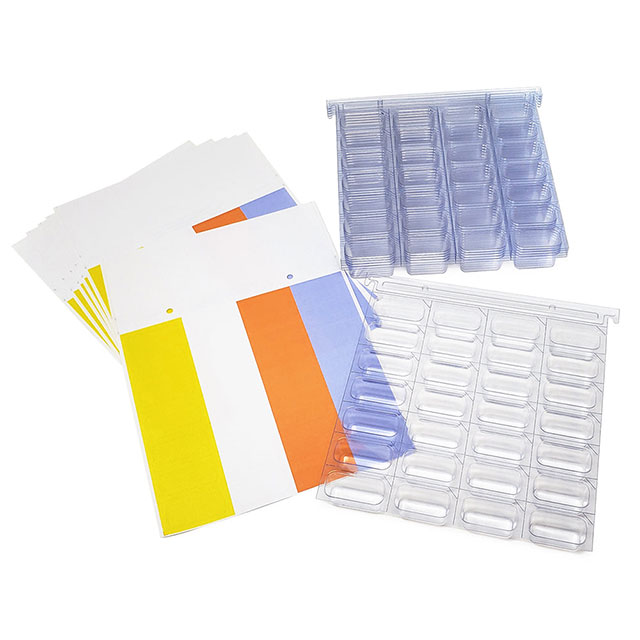
Material selection should follow the medicine rather than appearance alone. Transparent structures improve product visibility, whereas opaque layers can be considered when light protection is a priority. Cavity depth must accommodate the tablet or capsule without crushing it, while enough clearance is needed for consistent sealing. The opening method also matters: push-through foil may be convenient for some users, while a peel-open structure may suit people who cannot apply concentrated thumb pressure. No material should be selected only because it is commonly used for another medication. Barrier performance, compatibility, seal integrity, distribution conditions, and the product’s stability data should guide the final specification.
The clearest operational benefit is dose organization. A chronological layout can reduce the need to sort tablets from several bottles before every administration, which is useful for people managing multiple prescriptions and for caregivers preparing scheduled doses. In pharmacies and care facilities, a clearly labeled pack can support checking, documentation, and handover because staff can see the remaining compartments without opening the entire package. Individual cavities may also limit repeated exposure of unopened doses during normal use. These benefits are strongest when the pack has been accurately filled and checked, the schedule is current, and users understand how to follow it. Medication packaging supports the care process, but it does not replace prescription review or professional supervision.
Blister packaging for medication can also provide tamper evidence because a broken seal or opened cavity is usually visible. Child-resistant performance, however, should not be assumed simply because a pack is difficult to open. A compliant child-resistant package must be tested to show that it is significantly difficult for young children while remaining accessible to adults. This creates an important design balance for older users, people with reduced hand strength, and patients with limited vision. Larger text, strong contrast, obvious opening instructions, and an appropriate peel or push force can improve usability. A protective design that patients cannot operate correctly may encourage them to remove doses early, defeating the purpose of the packaging.
Decision Factor | Medication Blister Pack | Bottle or Vial |
|---|---|---|
Dose organization | Built into the cavity layout | Usually managed separately by the user |
Visibility of remaining doses | Opened and unopened positions are visible | Remaining quantity may be less obvious |
Prescription changes | Packed doses may require replacement | Contents may be easier to adjust |
Access method | Push-through or peel-open | Reclosable cap |
Exposure during use | Unopened cavities remain closed | The container is reopened repeatedly |
Packaging volume | May use more material per dose | Uses one container for multiple doses |
Medication blister packs are not automatically appropriate for every prescription. They are primarily used for solid oral doses such as tablets and capsules, while liquids, creams, inhalers, and other dosage forms need suitable original containers. Some solid medicines may also have specific moisture, light, temperature, or handling requirements that a proposed card cannot meet. Repacking a medicine into a different container-closure system can affect its established shelf life, so equivalent protection should not be assumed without supporting evaluation. The pharmacy or product owner must confirm compatibility, storage conditions, expiration dating, and labeling before the pack is used.
Prescription changes create another practical limitation. If a doctor stops a medicine or changes its strength after a weekly or monthly card has been prepared, the remaining compartments may no longer match the current regimen. Users should not remove, replace, or rearrange tablets without instructions from the dispensing professional. Accessibility must also be assessed before large quantities are produced. Small print, weak contrast, excessive opening force, similar-looking cavities, and complicated sequences can increase rather than reduce confusion. Child resistance and senior accessibility should be evaluated separately because neither feature guarantees the other. Medical blister packaging works most effectively when medication stability, labeling accuracy, human factors, and change-control procedures are considered together.
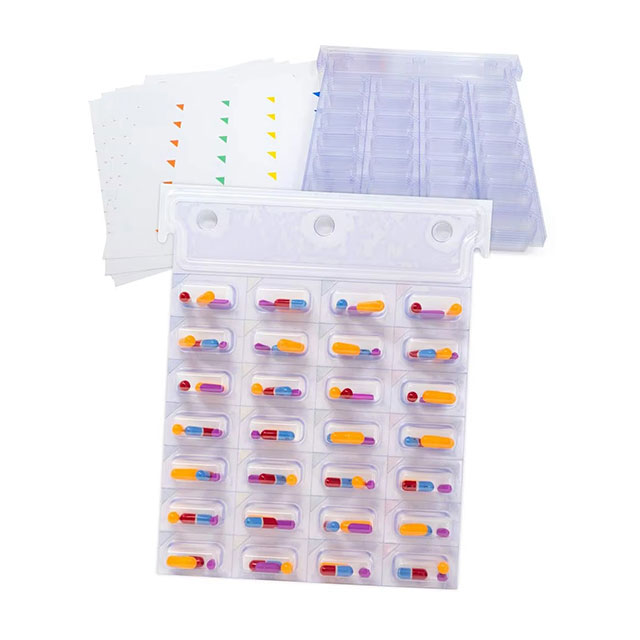
A useful specification begins with the medication program rather than a preferred package shape. Buyers should document the dosage form, tablet or capsule dimensions, number of doses, schedule, required labeling area, distribution route, expected storage environment, and intended user group. The cavity drawing should control fit and movement, while the lidding and card design should define opening direction, seal area, print position, and identification sequence. Samples should then be evaluated with the actual product or an appropriate qualified substitute. Seal integrity, transport resistance, readability, opening force, and compatibility need measurable acceptance criteria rather than subjective descriptions such as “strong” or “easy to open.”
Manufacturing controls are equally important because a good drawing cannot compensate for inconsistent forming or sealing. Hangzhou Kesheng Packaging Material Co., Ltd. has mold development, blister forming equipment, production testing, traceability procedures, and an aseptic workshop with environmental controls. Its medical range includes transparent pill compartments, medical trays, and customizable card formats. These capabilities are relevant when a buyer needs different cavity dimensions, compartment quantities, materials, or printed layouts. Still, each project should define its own validation and quality requirements according to the medicine, destination market, filling process, and applicable regulations. A reliable manufacturer should be able to connect design decisions with production controls and documented inspection criteria.
Medication blister packaging can simplify dose tracking, protect unopened tablets or capsules, and provide clearer instructions than loose medication stored in several containers. Its effectiveness still depends on compatibility, barrier performance, seal integrity, readable labeling, accessibility, and accurate prescription management. Buyers should define these requirements before selecting cavity dimensions, card layouts, or opening methods. Hangzhou Kesheng Packaging Material Co., Ltd. is a medical blister packaging manufacturer with documented forming, mold-development, quality-control, and controlled-workshop capabilities that can support customized medication pack specifications.
A: It organizes tablets or capsules in sealed cavities, helping protect individual doses, display a medication schedule, and show which compartments have already been opened.
A: It may be better for structured schedules and dose tracking, while bottles can offer greater flexibility when prescriptions change frequently or doses are taken as needed.
A: No. Suitability depends on dosage form, stability, barrier needs, storage conditions, and professional approval. Liquids, creams, inhalers, and some sensitive medicines require other containers.
A: No. Child resistance is a tested performance characteristic. A standard push-through or peel-open pack should not be described as child-resistant without appropriate testing.
A: The layout may include medication identification, dosage, day, time, opening sequence, warnings, storage instructions, lot details, and expiration information required for the application.


