
Views: 0 Author: Site Editor Publish Time: 2026-06-16 Origin: Site


High-quality plastic packaging shouldn't end its lifecycle after one delivery. For bakeries, caterers, and eco-conscious consumers, extending container utility directly offsets packaging costs. It also significantly reduces overall environmental impact. The tension between single-use convenience and modern sustainability goals requires a highly strategic approach to packaging operations. You must rethink how materials flow through your kitchen. Relying solely on single-use workflows drains budgets quickly. By choosing durable, food-safe materials initially, you can transform a standard Plastic Pastry Box from a disposable expense into a reliable reusable asset. We will show you exactly how to achieve this transformation. You will discover practical ways to stretch your packaging investment further. We cover everything from evaluating material safety to executing smart secondary uses. You will learn how to navigate health codes safely while maintaining product presentation. We also explain how to balance manual labor costs against direct material savings.
Not all plastics are safe for extended reuse; verifying food-grade status and material type is the mandatory first step.
Implementing clamshell food container reuse strategies can lower back-of-house operational costs.
The viability of reuse plastic food containers depends on balancing the labor/water costs of sanitization against the cost of new inventory.
Investing in high-quality, recyclable PET containers ensures that once repurposing is no longer viable, the end-of-life disposal remains environmentally compliant.
Every single packaging item impacts your bottom line directly. Extending container usage by just two or three cycles completely changes your unit economics. Food businesses typically operate on razor-thin profit margins. Buying fewer replacement boxes saves serious capital over time. This approach redefines disposable containers as valuable operational assets rather than pure liabilities. You get more value out of every dollar spent.
Modern buyers care deeply about the environment. They actively seek out brands committing to eco-friendly practices. Implementing sustainable food packaging aligns perfectly with these consumer expectations. You do not have to sacrifice product visibility to be green. Clear plastics keep your baked goods looking fresh and highly appealing to walk-in traffic. When customers see you actively promoting reuse, brand loyalty naturally increases. The unboxing experience feels much more responsible.
We must also assess the true environmental cost of our packaging choices. A common waste dilemma exists in foodservice logistics. Throwing away plastic expands your local landfill footprint. However, washing containers consumes fresh water and electrical energy. You have to weigh these factors carefully. A balanced strategy targets specific containers for reuse where manual sanitization makes ecological sense.
Best Practice: Track your packaging inventory weekly. Monitor how many boxes return to your kitchen versus how many enter the trash.
Common Mistake: Assuming all recycling centers accept soiled containers. You must clean plastics before sending them to processing facilities.
Material science dictates how we safely reuse packaging. Polyethylene Terephthalate, commonly known as PET or PETE, dominates the packaging industry. It provides unmatched clarity and essential safety for cold foods. Most high-quality deli and bakery boxes rely on this exact resin formulation. The material resists shattering upon impact. It maintains structural integrity well under standard handling conditions. Global recycling streams process PET highly efficiently.
Health and safety constraints remain your absolute top priority. You must identify proper food-safe labels on every box you intend to wash. Understanding chemical migration risks protects your customers from harm. PET performs beautifully in cold or ambient temperatures. You should strictly avoid high-heat applications altogether. Never microwave these boxes under any circumstances. Heat causes rapid material degradation and unsafe chemical leaching.
Sanitization protocols require incredibly clear guidelines for your staff. A safe commercial wash differs significantly from home dishwashing. Commercial operators typically use a strict three-compartment sink setup. They employ lukewarm water and FDA-approved sanitizing solutions. Hot commercial dishwashers will instantly warp the plastic. You must train employees on proper temperature thresholds.
Durability thresholds tell you exactly when to stop using an item. Inspect your clear boxes regularly during the wash cycle. Look for micro-abrasions along the interior walls. Check for obvious clouding in the clear plastic. Examine the hinge stress points closely for tiny tears. When you spot these warning signs, stop repurposing immediately. It is time to recycle the unit safely.
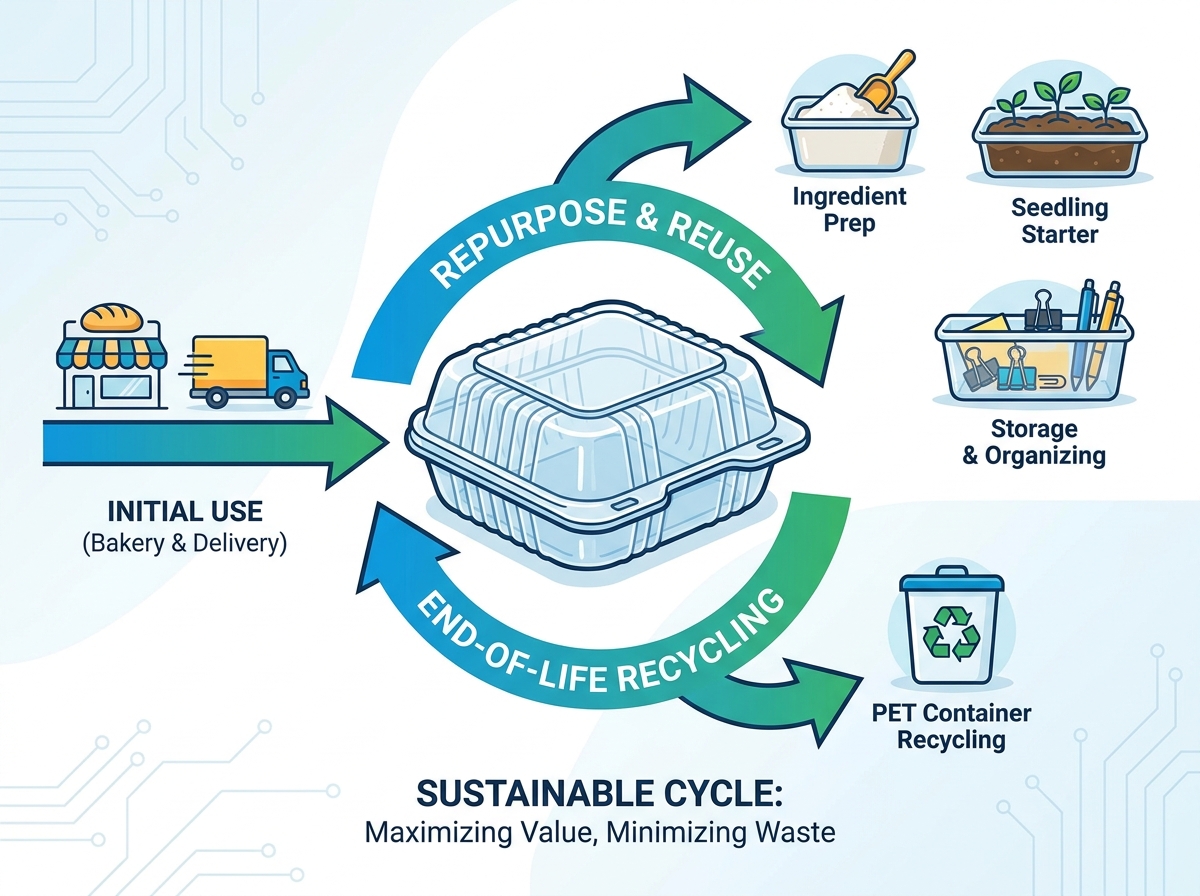
Many operators throw away perfectly good structural assets daily. We can capture immense value by redirecting these boxes. Here are six highly effective repurposing strategies you can implement right away.
Busy kitchens need supreme organization to function efficiently. You can repurpose sturdy boxes for dry-ingredient staging areas. They work exceptionally well for portioning out flour, sugar, or nuts. Clear boxes allow prep staff to identify contents instantly without opening lids. This modular approach keeps walk-in coolers neatly arranged. It also prevents cross-contamination between dry goods effectively.
Loyalty programs drive serious revenue for local bakeries. Structure a localized "bring it back" loop for your regular patrons. Offer customers a small discount when they return clean containers. This strategy drives repeat foot traffic directly to your storefront. It builds strong community goodwill almost immediately. Customers genuinely love feeling involved in your sustainability journey.
Urban farmers and hobbyists love clear plastics. Leveraging clamshell food container reuse creates perfect miniature greenhouses. The built-in hinges allow you to prop open lids for essential airflow. The transparent casing lets sunlight hit the seedlings perfectly. You trap necessary moisture inside to speed up seed germination. This setup works beautifully for growing basil and micro-cilantro.
Clear boxes organize non-food items effortlessly. Use the transparent casing for immediate visual identification of contents. Sort small hardware like screws, bolts, or nails in your maintenance closet. Organize loose office supplies easily on your back-office desk. Bakers can neatly store piping bags and delicate decorating tips inside them. The tight snap-locks prevent tiny items from spilling out during transport.
Local food banks desperately need reliable transit materials. Gently used containers provide an excellent logistical solution for them. Clean them thoroughly first using approved manual methods. Donate these sturdy boxes to local shelters or community kitchens. They require reliable packaging to safely transport recovered meals. Your repurposed boxes help feed the community securely while minimizing overhead costs.
Presentation matters intensely in retail settings. Transform rigid plastic bases into tiered sampling trays for your counter. Cut and stack them to create dynamic window display risers. Clean, transparent plastic fades into the background naturally. It allows your fresh baked goods to become the true focal point. Customers focus entirely on the food, not the display structure.
Every operational choice carries hidden expenses. The sanitization trade-off requires careful financial calculation. You must measure the water, chemical, and labor costs associated with manual washing. Attempting to clean and reuse plastic food containers takes actual staff time. If staff spend twenty minutes scrubbing cheap plastic, you lose money. Sometimes, recycling the unit proves much more cost-effective for the business.
Risk mitigation involves strict food safety practices at all times. You carry legal liability when storing commercial food. Reusing compromised containers introduces severe cross-contamination risks into your kitchen. Dangerous pathogens can hide easily in tiny scratches. You must establish rigid visual inspection protocols for your dishwasher crew. Safety always supersedes marginal cost savings.
End-of-life action requires clear internal rules for all employees. Staff members need simple criteria for pulling a container out of rotation. When a box loses structural integrity, it enters the recycling stream immediately. Do not hesitate to discard heavily worn items. Keeping broken containers slows down service.
Visual Condition | Structural Integrity | Action Required |
|---|---|---|
Crystal clear, no scratches | Hinge snaps tightly | Approve for reuse in dry storage |
Minor scuffs on bottom | Closes but requires pressure | Downgrade to non-food sorting |
Cloudy or severely scratched | Hinge is torn or weakened | Recycle immediately |
Sourcing the right materials dictates your overall success. Structural integrity sits at the absolute top of the checklist. Evaluate hinge durability thoroughly before buying in bulk. Test the snap-lock security repeatedly during your sample phase. Assess the overall stacking strength for multi-use scenarios in your fridge. Flimsy plastics simply will not survive a second round of demanding usage.
Clarity and presentation determine your brand image. Ensure the plastic remains totally transparent after washing. It should look highly professional over multiple uses. Customers notice cloudy or scuffed packaging very quickly. They wrongly associate poor packaging with stale or low-quality food.
Scalability and sourcing ensure consistent inventory supply year-round. Can your supplier provide high-grade recyclable PET containers at volume? You need a highly reliable manufacturing partner. Inconsistent plastic quality ruins a reuse program entirely. One bad batch can derail your internal prep processes for weeks.
Plan your exact next steps systematically. Request a few physical samples from your primary distributor. Conduct an aggressive stress test in your own kitchen. Wash the items repeatedly by hand. Re-seal them multiple times to test the hinges under pressure. Finally, calculate your projected return on investment over a standard six-month timeline. Consider both material savings and new labor costs.
A successful container longevity strategy starts before you even place a purchasing order. You must intentionally design your workflow around durability and safety.
Audit your current inventory: Check the resin codes on your existing supplies to confirm they support secondary applications safely.
Prioritize robust PET materials: Invest slightly more upfront for containers engineered to withstand manual washing and repeated handling.
Launch an internal trial: Pick one specific dry-prep ingredient and transition it entirely to repurposed clear packaging for two full weeks.
Calculate actual labor: Time your staff during the sanitization process to ensure the financial math supports your environmental goals.
Request commercial samples today: Contact your packaging partner to secure high-clarity, structural-grade options tailored for extended utility.
A: No. PET is designed exclusively for cold or room-temperature applications. Exposing it to high heat through microwaves or commercial dishwashers can rapidly degrade the material and compromise food safety.
A: It depends heavily on your sanitization method and physical wear. You must discard and recycle the item immediately if the container shows cracks, deep scratches, or persistent clouding.
A: Yes, particularly for dry storage and internal kitchen prep. However, for external customer-facing return programs, businesses must accurately factor in the labor costs of inspecting and sanitizing returned containers.
A: Most are made from #1 PET, which is highly recyclable globally. Always check the resin identification code on the bottom of the container to ensure compliance with your local recycling facility.


