
Views: 388 Author: Site Editor Publish Time: 2026-06-08 Origin: Site


Walking out of a bakery carrying a handcrafted dessert feels like a small victory. However, joy shatters quickly if the treat arrives home crushed, smudged, or stale. Poor packaging choices carry massive hidden costs for food businesses. Ruined frosting, compromised freshness, and a messy unboxing experience directly harm your brand. These failures kill repeat sales.
A bakery box serves as much more than a simple vessel. It acts as a critical touchpoint. It protects food safety, elevates brand perception, and ensures product integrity. Selecting the right container demands a careful balance. You must weigh structural engineering, regulatory compliance, and visual appeal equally.
In this guide, we explore the essential packaging features you need to consider. You will learn how to align material choices with your specific menu. We will also cover how to optimize presentation to drive profitability and enhance customer satisfaction.
Material matters: Match the packaging material (like a high-visibility plastic pastry box) to the moisture and fat content of the baked good.
Visibility drives sales: Strategic window placement or clear packaging increases impulse purchases while showcasing product quality.
Compliance is non-negotiable: Every component must meet strict food-safe dessert box standards to prevent chemical leaching and ensure consumer safety.
Function over form: Secure closures, grease resistance, and transport stackability must precede aesthetic branding choices.
Packaging design connects directly to margin protection. A subpar box causes tangible financial losses. Imagine a delicate buttercream cake placed in a flimsy container. A slight bump ruins the frosting. Exposure to air creates stale pastries. Customers inevitably demand refunded orders. These negative experiences erode your bottom line.
Customer experience metrics heavily depend on unboxing. Structural and visual features directly impact perceived value. When customers receive an intact, beautifully presented pastry, they perceive a premium product. They happily pay a higher price. They also share their experiences on social media. This organic marketing acts as a powerful growth engine for your bakery.
Operational efficiency also relies on smart packaging choices. In high-volume commercial kitchens, speed matters. Cottage food businesses also face strict time constraints. Complex packaging slows down your workflow. Incorporating intuitive bakery box design elements saves valuable labor time. Easy-to-assemble tabs, pre-formed corners, and snap-shut lids streamline your daily operations. You spend less time folding boxes and more time fulfilling orders. This efficiency directly boosts your overall profitability.
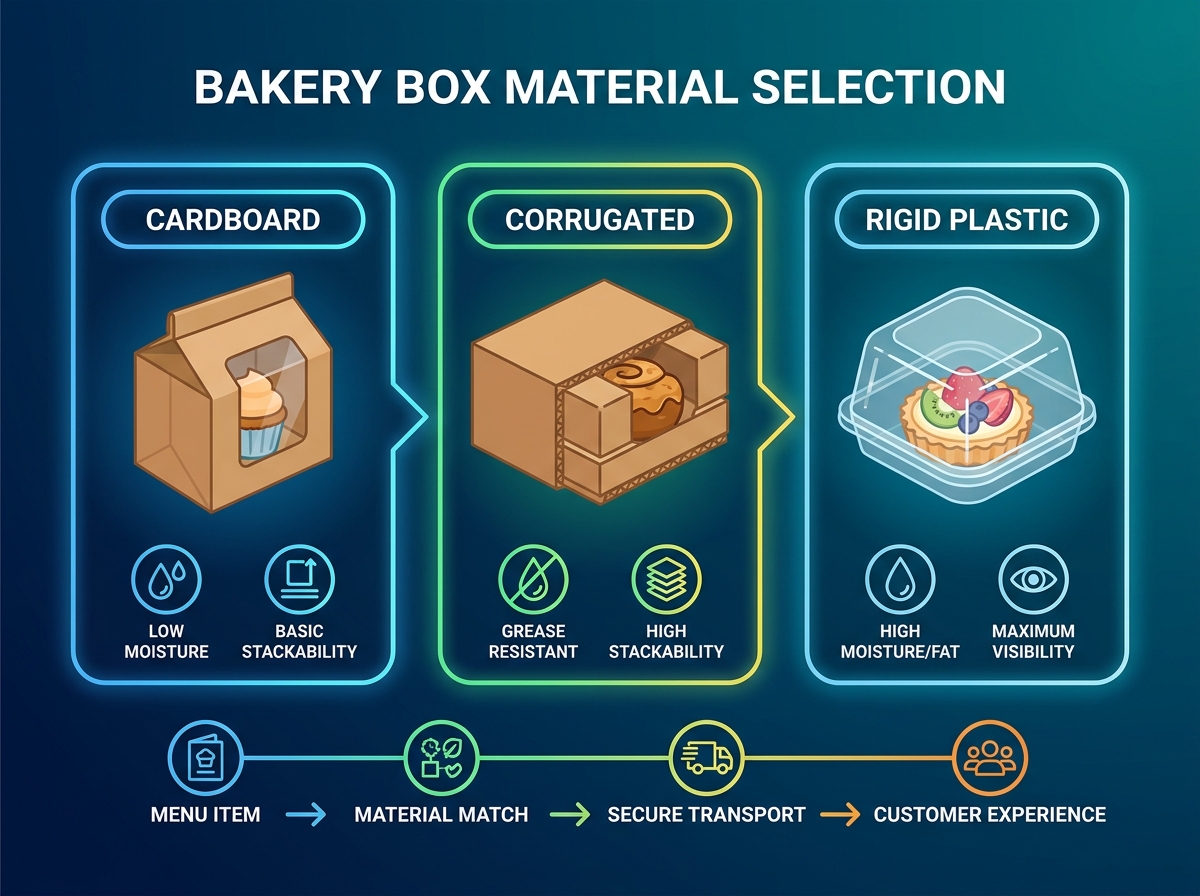
Selecting the right material requires understanding your menu items deeply. Standard cardboard works well for dry items like bread or simple cookies. Corrugated options provide insulation and heavy-duty support for large cakes. However, rigid plastics offer distinct advantages for delicate and moist desserts.
Consider a high-moisture item like a fruit tart. Paper-based materials absorb moisture quickly. The box becomes soggy. A rigid Plastic Pastry Box outperforms paper in these scenarios. It creates a protective shell. It guards delicate, layered desserts against bumps. The rigid structure prevents the lid from sagging into your meticulously piped decorations.
Risk mitigation during transport demands careful planning. Stackability is crucial for wholesale deliveries and event catering. The bottom box must never collapse under the weight of the boxes above it.
Standard Cardboard: Best for dry items, rustic aesthetics, and quick local transport.
Corrugated Paper: Ideal for heavy cakes, large catering orders, and temperature retention.
Rigid Plastic: Perfect for high-moisture treats, delicate piping, and maximum visibility.
Moisture and grease barriers prevent structural failures. Cheap packaging often lacks proper linings. Butter and oils seep through the base. This creates unsightly grease bleed-through. It weakens the box bottom. You must select poly-coated paperboards or specific high-grade plastics. These materials repel grease effectively. They keep the packaging pristine from your kitchen to the customer's dining table.
Consumers eat with their eyes first. The psychology of bakery displays relies heavily on visual temptation. Hiding beautiful pastries inside an opaque box diminishes their appeal. Visibility validates freshness. Customers want to see the golden crust or the vibrant fruit glaze before they buy.
Evaluating your visibility options requires balancing protection and presentation. Let us compare 100% clear pastry packaging against hybrid designs. Hybrid designs usually feature a cardboard base with a PET plastic window. A fully clear container provides a 360-degree view. It works perfectly for retail grab-and-go coolers. Hybrid boxes offer a traditional bakery feel while still teasing the product inside. Hybrids also provide solid surfaces for branded stickers.
Implementation brings distinct challenges. Condensation poses the biggest risk for clear packaging. Warm pastries release steam. If sealed too early, moisture gets trapped. The transparent lid fogs up completely. It ruins the presentation. It also accelerates spoilage by making the pastry soggy. The solution is straightforward. Ensure all baked goods cool fully before sealing them. Alternatively, select packaging featuring micro-ventilation. Tiny air holes allow excess heat to escape. They maintain clarity while protecting the treat inside.
Regulatory baselines protect both your customers and your business. Not all packaging belongs near food. A true food-safe dessert box requires strict manufacturing standards. You must verify FDA compliance. You should also demand BPA-free plastics. Furthermore, any printed elements must utilize food-grade inks. Chemical leaching happens when non-compliant materials touch fats or moisture.
Third-party delivery apps transformed the bakery landscape. Platforms like UberEats and DoorDash demand new packaging features. Tamper-evident seals are now a growing necessity. Locking tabs or specialized stickers show the customer the box remains unopened since leaving your kitchen. This simple feature builds immense consumer trust. It guarantees product safety during transit.
Thermal and chemical realities often go overlooked. Always check manufacturer specifications for temperature thresholds. Can the box handle a freshly baked, warm pastry? Cheap plastics warp under heat. Warping compromises the seal. Worse, heat can trigger chemical leaching if the plastic grade is insufficient. You must match the container's heat tolerance to your specific baking process.
Safety Feature | Primary Function | Operational Benefit |
|---|---|---|
BPA-Free Material | Prevents chemical leaching | Ensures FDA compliance and customer health |
Tamper-Evident Tabs | Secures lid during transit | Builds trust for third-party delivery orders |
Micro-Ventilation | Releases excess heat | Prevents condensation and maintains freshness |
Food-Grade Inks | Eliminates toxic ink transfer | Allows safe internal box printing |
Branding scales directly with your business size. Entry-level branding offers a low barrier to entry. Custom stamps or printed stickers provide a professional look on plain boxes. They keep initial costs low. As your order volume grows, fully printed custom bakery packaging becomes cost-effective. Fully custom boxes elevate your brand identity. They turn every customer carrying your box into a walking billboard.
Internal architecture matters just as much as the exterior design. Delicate items like cupcakes or macarons need physical separation. Without it, they collide during transit. Frosting smudges. Shells crack. Utilizing inserts, dividers, and sturdy base boards solves this problem. Custom cavity inserts cradle each individual treat. They absorb transit shocks and keep the presentation flawless upon opening.
Your box also provides valuable information real estate. Do not waste the bottom or sides of the packaging. Operational elements should be clearly visible. Include strict allergen warnings to protect sensitive customers. Provide simple storage instructions. Tell them whether to refrigerate the tart or leave the cookies at room temperature. Finally, print QR codes linked to your website. This drives repeat reordering seamlessly.
Selecting the right supplier requires rigorous physical testing. Never commit to a bulk order based on photos alone. You need an evaluation framework.
Request Samples: Ask suppliers for physical prototypes of their boxes.
Conduct Physical Tests: Place your actual baked goods inside.
Perform the Shake & Stack Test: Mimic delivery conditions. Shake the box gently. Stack heavy items on top. Observe if the structural integrity holds.
Check Grease Resistance: Leave a buttery pastry inside for 24 hours. Check the bottom for bleed-through.
Storage and logistics heavily influence your final choice. Compare the physical footprint of different styles. Flat-pack paper boxes require assembly but save massive shelf space. Pre-formed plastic containers save labor time but demand significant warehouse or back-of-house storage space. Factor these constraints into your daily workflow.
Balancing cost versus margin determines long-term viability. You cannot overspend on a box, no matter how beautiful it is. Use a simple heuristic. Allocate approximately 5% to 10% of the product's retail price to packaging costs. This ratio maintains healthy profit margins while ensuring adequate structural protection. As a next-step action, recommend ordering a sample pack from two or three vetted suppliers. Test these samples relentlessly against your most fragile menu items.
The perfect bakery box successfully marries structural protection with an appetizing presentation. It serves as an unyielding shield against transit damage while acting as a silent salesperson. Material choice, visibility, and internal architecture all play pivotal roles in customer satisfaction.
Maintain a skeptical approach when buying supplies. Prioritize strict food safety and test rigorously for grease and moisture resistance. Ensure your chosen packaging scales naturally with your operational workflow and storage limits. Beautiful boxes matter little if they slow down your kitchen or fail to protect the dessert.
Take immediate action today. Audit your current packaging lineup against the criteria discussed above. Identify where grease leaks or frosting smudges occur. Reach out to a reliable supplier for updated specification sheets and physical samples to elevate your bakery brand.
A: Condensation occurs when warm items release steam inside a sealed container. To prevent this, ensure all baked goods cool completely to room temperature before packaging them. You can also select boxes featuring micro-ventilation holes. These small elements allow residual heat to escape safely without compromising the seal.
A: Food-grade packaging uses virgin materials and non-toxic coatings specifically designed for direct contact with edibles. Standard packaging may contain recycled materials with unknown origins or toxic inks. Food-grade options guarantee no harmful chemicals or odors will leach into your pastries, ensuring FDA compliance and consumer safety.
A: Yes, many clear bakery boxes are recyclable, especially those made from PET or RPET plastics. However, local recycling limitations vary significantly by municipality. To maintain trustworthiness, encourage customers to rinse out any lingering food debris or grease before placing the clear container in their recycling bin.
A: A realistic target is spending between 5% and 10% of the product's final retail sale price on packaging. For example, a $5 pastry should utilize a box costing around $0.25 to $0.50. This percentage keeps your profit margins healthy while ensuring high-quality, protective presentation.


